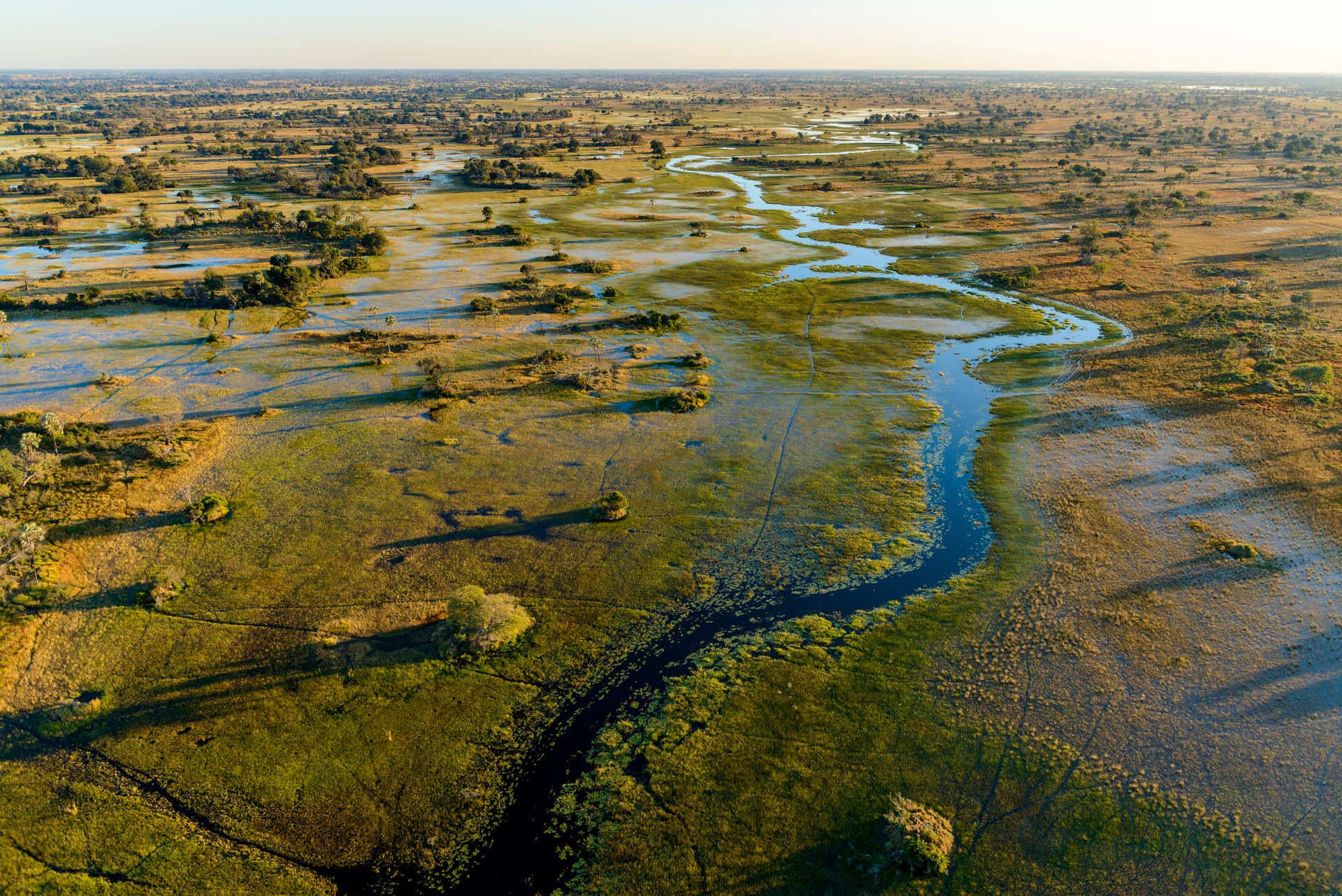
Published 2026 lodge rates, per person sharing, per night, low to peak season. Flights and park fees extra; final price depends on dates and availability.
A Botswana safari trades volume for space: private concessions with few camps, fly-in access by light aircraft, and the Okavango Delta, where the flood arrives in the dry season and turns the plains into channels you explore by mokoro and boat as well as by vehicle. Pair it with Moremi, the Chobe and Linyanti concessions and the Makgadikgadi and Kalahari for contrast rather than repetition. Use this page for seasons, per person sharing rates and fit, then get matched with partners who hold the right camps for your dates. Package structures are compared in luxury Botswana safari packages, and the Delta by season in the Okavango Delta safari guide.
Build a Botswana brief, get matched →
Hero photography on this page is from a partner operator. Trips with that operator book through our Outside Agents rail and are not operated by Safari Awaits. Commercial disclosure. Photo credits.
Botswana safari areas, and what each one is for
The Okavango Delta is the centerpiece: water camps for mokoro and boating, land camps for drives, and mixed camps that offer both depending on the flood. Moremi Game Reserve protects the eastern Delta and holds strong predator viewing. The Chobe riverfront and the Linyanti and Kwando concessions are elephant country, with boat safaris on the river and private concessions where night drives and walking are possible. The Makgadikgadi Pans and Central Kalahari add salt pans, meerkats and, in the green season, zebra and wildebeest gathering on the grasslands.
- Okavango Delta: water and land, mokoro, the signature Botswana experience
- Moremi: predators inside the Delta
- Chobe and Linyanti: elephants, river boating, private concessions
- Makgadikgadi and Kalahari: pans, meerkats, green-season contrast
Why a Botswana safari costs more, and when it is worth it
Botswana has long favored low-volume, high-value tourism, so many of the best areas are private concessions with a handful of camps, reached by light aircraft. That is why, on published 2026 rates, Okavango camps cost $658–$1,148 per person sharing per night at a classic fly-in camp and run to $1,848–$4,225 at the top camps, from low to peak season. You are paying for space: few vehicles at sightings, off-road driving and night drives in concessions, and water activities you cannot get elsewhere. Ways to soften the cost include the green season (roughly November to March), a road transfer from Victoria Falls to Chobe instead of an extra flight, and three camps rather than four. Compare the economics in what an African safari costs.
Best time for a Botswana safari
Botswana runs on two clocks. The Okavango flood usually arrives in the dry winter months, peaking around June to August, which is when water activities are at their best and wildlife concentrates on the islands. September and October are hot, very dry and excellent for game. The green season, roughly November to March, brings lower rates, newborn animals, dramatic storms and the best of the Kalahari and Makgadikgadi. Check exact months against other countries in when to go.
Fly-in logistics on a Botswana safari
Most travelers arrive through Maun or Kasane, usually via Johannesburg, then move between camps by light aircraft. Luggage limits on these flights are strict, usually around 20 kg per person in soft bags including hand luggage, so confirm the exact allowance with your operator. Three camps with three nights each is a common structure. Self-driving Botswana is for experienced overlanders only; see self-drive safaris for where driving yourself works better.
How Botswana compares on price and season: costs and timing across our full destination map.
Choose Botswana if…
- Low-density wildlife viewing in private concessions matters more than a long checklist
- You are comfortable traveling via light aircraft between remote bush airstrips
- Water, woodland, and desert contrasts appeal to your travel style
- A premium budget can be concentrated on private access, guiding, and exclusivity
Reconsider if…
- You dislike small light aircraft or strict soft-bag luggage limits
- You want an economical, road-based overland safari circuit
- You prefer cities, beaches, or nightlife within the same country borders
Where to focus
Okavango Delta
A UNESCO World Heritage inland delta that transforms seasonally. Permanent water camps offer year-round boating and mokoro trips, while seasonal flood camps deliver dynamic land and water game drives.
Read about Okavango Delta →High predator density & diverse habitatsMoremi Game Reserve
Protecting the central and eastern Delta, Moremi merges mopane woodland, acacia forests, and open floodplains famous for wild dog packs, lion prides, and elusive leopards.
Read about Moremi Game Reserve →Massive elephant herds & river safarisChobe & Linyanti Concessions
The Chobe Riverfront provides some of the densest elephant and buffalo concentrations in southern Africa, while the private Linyanti and Savuti concessions offer exclusive predator tracking and night drives.
Read about Chobe & Linyanti Concessions →Desert adaptation, meerkats & star-gazingMakgadikgadi & Kalahari
Vast white salt crusts and golden grasslands featuring habituated meerkat colonies, seasonal zebra migrations, and rare desert species under brilliant night skies.
Read about Makgadikgadi & Kalahari →Seasonality at a glance
| Period | Typical conditions | Who it suits |
|---|---|---|
| May–June | Drying weather with Delta floodwaters building in northern channels | Travelers seeking pleasant temperatures and emerging water activities |
| July–October | Peak dry season; clear blue skies, warm days, cool crisp nights | Classic safari priorities and travelers booking 9 to 18 months ahead |
| November–March | Green season; summer heat, afternoon thunderhead showers, lush landscapes | Photographers, birders, and value-conscious travelers seeking reduced rates |
| April | Transition month; clear skies, dry ground, impala rutting season | Flexible travelers seeking shoulder season pricing and quieter camps |
Seasonal patterns are historical guidance, not guarantees. Verify current local conditions and operating schedules before booking.
Three ways to do Botswana, priced per person sharing.
Classic Fly-In
$658–$1,148 per person sharing / nightFrom $13,135 per person sharing, 10 days (Central Kalahari, Okavango Delta and Victoria Falls), 19–28 May 2027; a partner operator's small-group sample with flights from Maun to camps
Includes: Shared bush flights, comfortable tented camps, meals, drinks & guided safaris
Authentic canvas tented safari camps providing excellent comfort, skilled local guides, and access to key reserve ecosystems.
Luxury Concession
$900–$2,050 per person sharing / nightFrom $19,895 per person sharing, 9 days (Linyanti and the Okavango Delta), April 2027; a partner operator's sample with flights between camps
Includes: Private concession access, night drives, off-roading, walking, gourmet dining
Vast private concessions with strict vehicle limits per sighting, spacious elevated suites with private plunge pools, and top-tier guides.
Ultra-Luxury Premier
$1,848–$4,225 per person sharing / nightFrom $31,595 per person sharing, 10 days (Botswana and Victoria Falls), April 2027; a partner operator's sample with flights between camps
Includes: Top camps in private concessions; private vehicle and guide on request
The pinnacle of African safari luxury featuring legendary camp positions, dedicated private vehicles, personal butler service, and tailored daily rhythms.
Move the inputs yourself: price a Botswana trip by month, style and nights.
Wildlife
Botswana shelters Africa’s largest single elephant population (~130,000) and serves as a vital global sanctuary for endangered African wild dogs, black rhinos, and formidable lion prides.
- African Elephant
- Enormous herds gather along the Chobe River and Okavango channels, swimming across deep rivers and feeding on palm islands.
- African Wild Dog
- Moremi and Linyanti private concessions remain one of the world's best locations to track wild dog packs during denning season.
- Lion & Leopard
- Famed prides in Savuti and Duba Plains specialize in hunting mega-fauna like buffalo, while leopards thrive in mopane forests.
- Aquatic Antelopes
- Rare sitatunga and red lechwe antelopes adapted with elongated hooves for moving effortlessly through flooded Delta reedbeds.
Where: Chief’s Island in Moremi for dense predator sightings; Linyanti and Savuti for elephant and lion interaction; Makgadikgadi for habituated meerkats.
The ways Botswana is best done.
Fly-in safaris
Soar between remote bush airstrips in light aircraft to maximize time in prime wildlife concessions.
How it works →ExperiencePrivate Concession & Mokoro
Enjoy exclusive night drives, off-roading, and peaceful water safaris unavailable in public national parks.
How it works →ExperienceLuxury Honeymoon Retreats
Secluded plunge-pool suites, private candlelit bush dinners under the stars, and romantic mokoro trips.
How it works →ExperiencePhotographic Safaris
Sunken photographic hides, open custom 4x4 vehicles with camera mounts, and expert photo guiding.
How it works →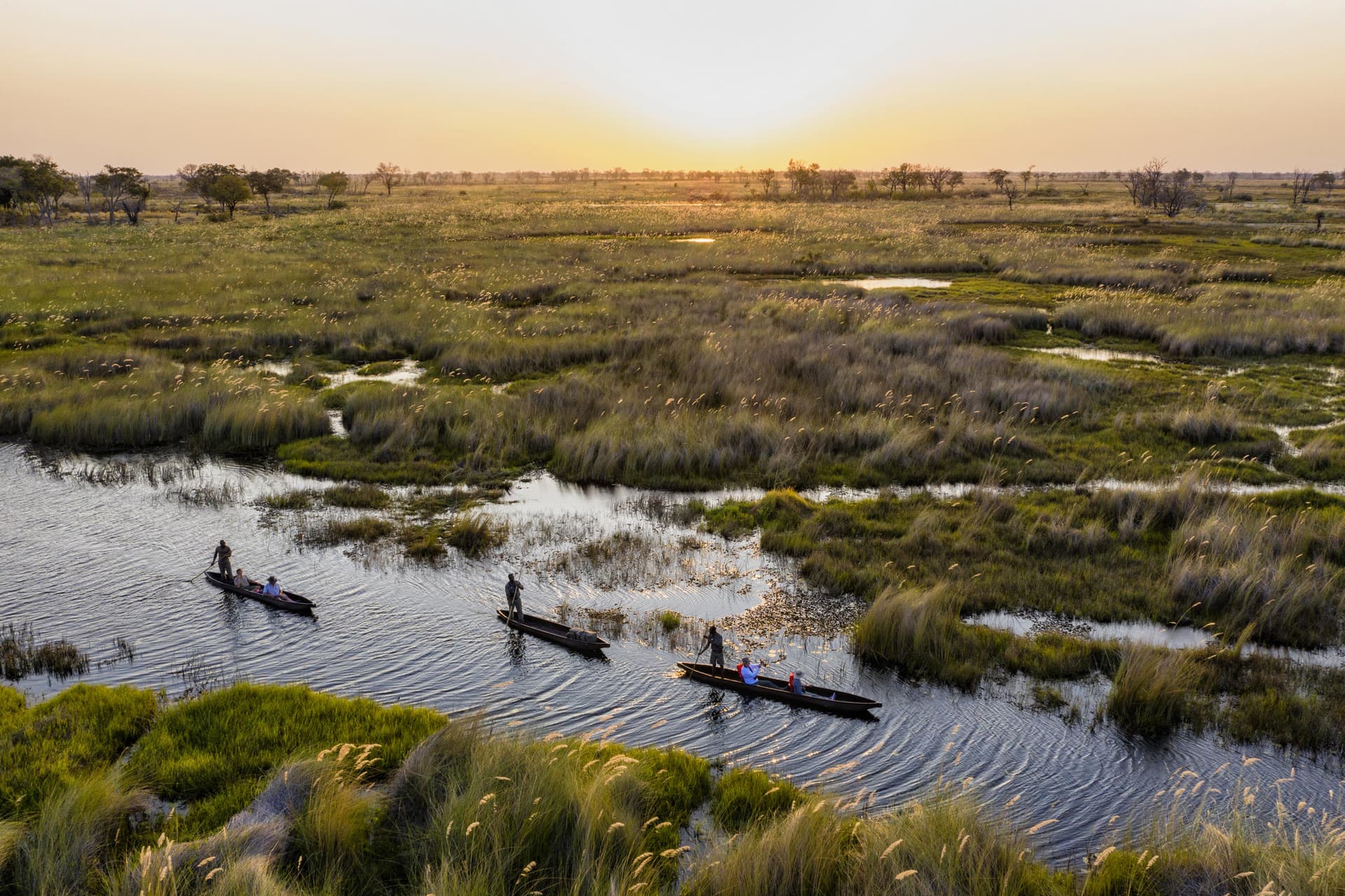

Where you sleep decides what you wake to.
Sample itinerary structures
Structure matters as much as place — see how the nine safari styles change vehicle time, privacy and cost.
Delta essentials
Two complementary Okavango or Moremi campsReduces movement while adding water-based and dry-land habitat contrast.
See this itinerary →10–12 nightsClassic northern Botswana
Okavango Delta + Moremi + Chobe / LinyantiCombines remote fly-in camp travel with dramatic river wildlife and big predator tracking.
See this itinerary →12–14 nightsWetland and desert
Okavango Delta + Moremi + Kalahari / MakgadikgadiCreates the ultimate ecosystem contrast for repeat safari travelers.
See this itinerary →Frequently asked questions
Is Botswana worth the higher price point?
Yes, if low vehicle density, exclusive private concessions, remote fly-in access, and top-tier guiding match your priorities. Travelers focused on lower costs or road circuits may prefer Tanzania, Kenya, or South Africa.
Will every Okavango Delta camp offer mokoro trips?
No. Water access depends on camp location, season, and water level. Permanent water camps offer boating year-round, whereas seasonal water camps shift to land drives when water recedes.
How far ahead should I book a Botswana safari?
Because camps in Botswana are small (often 6 to 12 suites), peak dry-season dates (July–October) routinely sell out 9 to 18 months in advance.
When is the best time for a Botswana safari?
June to October for dry-season game viewing, with the Okavango flood usually peaking around June to August. The green season, roughly November to March, is best for the Kalahari and Makgadikgadi and brings lower rates.
How many nights do you need for a Botswana safari?
Seven to ten nights is typical, usually three camps of three nights each, for example a Delta water camp, a Moremi or Linyanti land camp, and the Makgadikgadi or Chobe. Fewer moves mean more time on activities.
How much does a Botswana safari cost?
On published 2026 rates, Okavango camps run from $658–$1,148 per person sharing per night at a classic fly-in camp to $1,848–$4,225 at the most exclusive camps, from low to peak season. Season, the number of light-aircraft legs, and private concessions versus public reserves move the number most. See luxury Botswana safari packages for package structures.
Official planning sources
Use official destination and protected-area sources for baseline information. Entry rules, fees, health guidance, access and camp policies can change.
Go deeper on Botswana
Build a Botswana brief.
Share your month, budget, travelers and priorities. We’ll narrow it to the regions, trip structure and partners that fit — and tell you which don’t.
Get matched