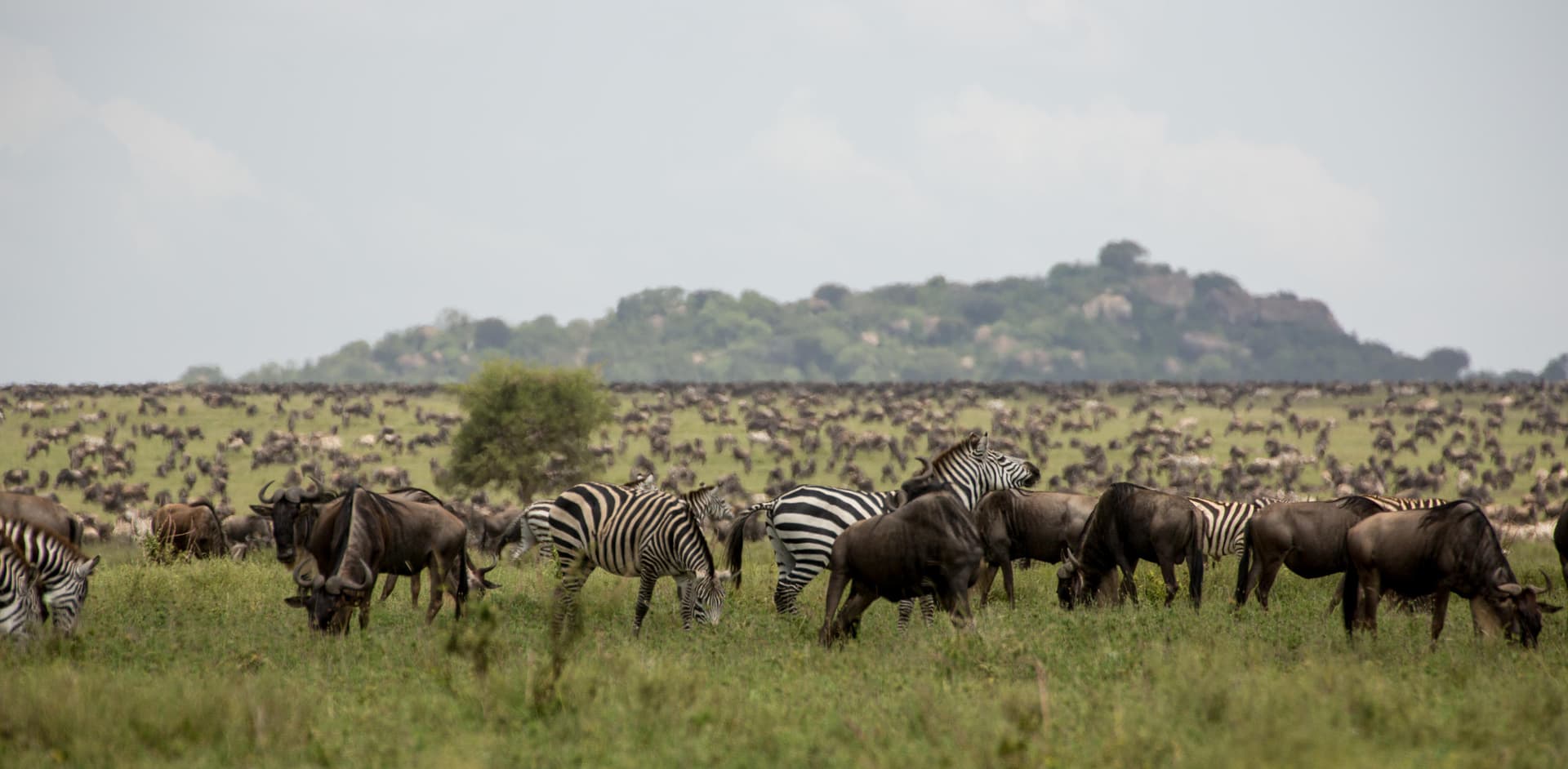
Tanzania offers remarkable scale and drama. The famous Northern Circuit links the Serengeti, Ngorongoro, Lake Manyara, and Tarangire, while southern reserves create remote fly-in wilderness alternatives. A well-designed itinerary aligns camp placement with seasonal wildlife movements and balances road travel with strategic bush flights.
Hero photography on this page is African Travel Inc creative (OWNER-approved site use; not ATI legal-cleared), fulfilled via our Outside Agents rail — not operated by Safari Awaits. Rate parity applies. Commercial disclosure. Photo credits.
How Tanzania compares on price and season: costs and timing across our full destination map.
Choose Tanzania if…
- Sweeping savannah landscapes and deep game-viewing days are your main goal
- Following the Great Migration herds is a central priority
- You want safari and Zanzibar beach in one trip, without backtracking
- You enjoy the variety of connecting iconic national parks on a northern circuit
Reconsider if…
- You require complete vehicle isolation and private concession rules everywhere
- You dislike dusty overland drives between park gates
- Your expectations depend entirely on witnessing one specific river crossing event
Where to focus
Serengeti National Park
Divided into Ndutu (calving), Central Seronera (big cats on kopjes), Western Corridor (Grumeti crossings), and Northern Mara River (dramatic river crossings).
Read about Serengeti National Park →Concentrated Big Five & UNESCO natural calderaNgorongoro Crater
A 2,000-foot-deep volcanic caldera holding some 25,000 large mammals, including rare black rhinos, golden-maned lions, and flamingo-filled soda lakes.
Read about Ngorongoro Crater →Massive elephant herds & giant baobab treesTarangire National Park
Famed for ancient baobab trees framing the Tarangire River, where thousands of elephants gather during the dry season alongside tree-climbing lions.
Read about Tarangire National Park →Uncrowded wilderness, river safaris & walkingRuaha & Nyerere (Selous)
Massive southern game reserves featuring wide river systems, baobab forests, boat safaris, and low vehicle density for discerning travelers.
Read about Ruaha & Nyerere →Seasonality at a glance
| Period | Typical conditions | Who it suits |
|---|---|---|
| January–March | Warm and dry in southern Serengeti; green grass after short rains | Travelers seeking predator drama and baby animal viewing |
| June–October | Peak dry season; clear skies, cool mornings, low bush vegetation | Classic first-time safari travelers and migration seekers |
| November–December | Short rains; brief afternoon showers, fresh green shoots | Photographers and travelers looking for shoulder season value |
| April–May | Long rains; heavy afternoon tropical rainstorms, lush green vistas | Seasoned travelers and value seekers wanting private wildlife viewing |
Seasonal patterns are historical guidance, not guarantees. Verify current local conditions and operating schedules before booking.
Three ways to do Tanzania, priced per couple.
Classic Road & Fly
$700–$1,100 / night$9,000–$15,000 per couple (8 nights)
Includes: Custom 4x4 safari vehicle with pop-up roof, quality lodges & tented camps, park fees
Excellent combination of overland scenic driving through the Northern Circuit and comfortable safari lodges.
Luxury Fly-In Migration
$1,200–$2,000 / night$16,000–$28,000 per couple (8 nights)
Includes: Domestic bush flights, luxury semi-permanent migration camps, private concession access
Saves hours of driving by flying directly between parks, following the Migration herds in elegant luxury tented camps.
Ultra-Luxury Premier
$2,200–$4,000+ / night$30,000–$55,000+ per couple (8 nights)
Includes: Exclusive private concessions (Grumeti), iconic Singita or &Beyond lodges, private 4x4 vehicle
Private air charters, Grumeti Concession night drives and off-roading, spa treatments, and kitchens that could hold their own in Cape Town.
Move the inputs yourself: price a Tanzania trip by month, style and nights.
Wildlife
Tanzania protects over 20% of Africa’s total large mammal population, supporting world-record concentrations of wild herbivores, lions, cheetahs, and endangered black rhinos.
- Wildebeest & Zebra
- Over 1.5 million wildebeest and 250,000 zebra move in unison across the Serengeti ecosystem year-round.
- Serengeti Cats
- Central Serengeti kopjes (granite outcrops) serve as vantage points for cheetahs, leopards, and resident lion prides.
- Black Rhinoceros
- Protected inside Ngorongoro Crater and northern Serengeti sanctuaries, providing rare Big Five opportunities.
- Tarangire Elephants
- Herds of up to 300 elephants dig for underground streams beneath ancient baobab trees during dry months.
Where: Ndutu Plains for wildebeest calving (Jan–Mar); Mara River for river crossings (July–Sept); Ngorongoro Crater floor for dense Big Five viewing.
The ways Tanzania is best done.
Migration Tracking Safaris
Position yourself at luxury semi-permanent camps directly in the path of the Great Herd.
How it works →ExperienceBush & Beach Combinations
Combine thrilling Serengeti game drives with turquoise waters and white sand beaches in Zanzibar.
How it works →ExperiencePrivate Family Circuits
Custom 4x4 vehicles, child-friendly lodges, and educational Maasai bush school activities.
How it works →ExperienceTailor-Made Luxury Safaris
Private concession access, fly-in transfers, and lodges by architects with international commissions.
How it works →

Where you sleep decides what you wake to.
Sample itinerary structures
Structure matters as much as place — see how the nine safari styles change vehicle time, privacy and cost.
Northern circuit foundation
Tarangire + Ngorongoro Crater + Central SerengetiA coherent first safari that balances iconic landscapes with manageable overland pacing.
See this itinerary →8–12 nightsSerengeti in depth
Two complementary Serengeti regions (e.g. Ndutu & North) + NgorongoroFollows seasonal herd movements while minimizing long road transfers.
See this itinerary →12–15 nightsBush and beach
Serengeti & Ngorongoro safari + Zanzibar coastBalances intensive game drives with a relaxing Indian Ocean beach recovery.
See this itinerary →Frequently asked questions
Can seeing the Migration river crossing be guaranteed?
No. The herds move continuously based on localized rainfall, and river crossings are spontaneous. We position you in prime crossing zones during key months, but recommend enjoying the entire wildlife experience rather than banking on one moment.
Should I fly or drive between Tanzanian parks?
A hybrid route works best: drive the short distances between Arusha, Tarangire, and Ngorongoro, then take a bush flight into or out of the Serengeti to save 6 to 8 hours of rough driving.
Is Zanzibar easy to combine with a Serengeti safari?
Very easy. Direct daily flights connect Serengeti bush airstrips to Zanzibar (ZNZ) in about 2.5 hours, making bush-and-beach seamless.
Official planning sources
Use official destination and protected-area sources for baseline information. Entry rules, fees, health guidance, access and camp policies can change.
Go deeper on Tanzania
Build the right Tanzania brief.
Share your month, budget, travelers and priorities. We’ll narrow it to the regions, trip structure and partners that fit — and tell you which don’t.
Find my safari