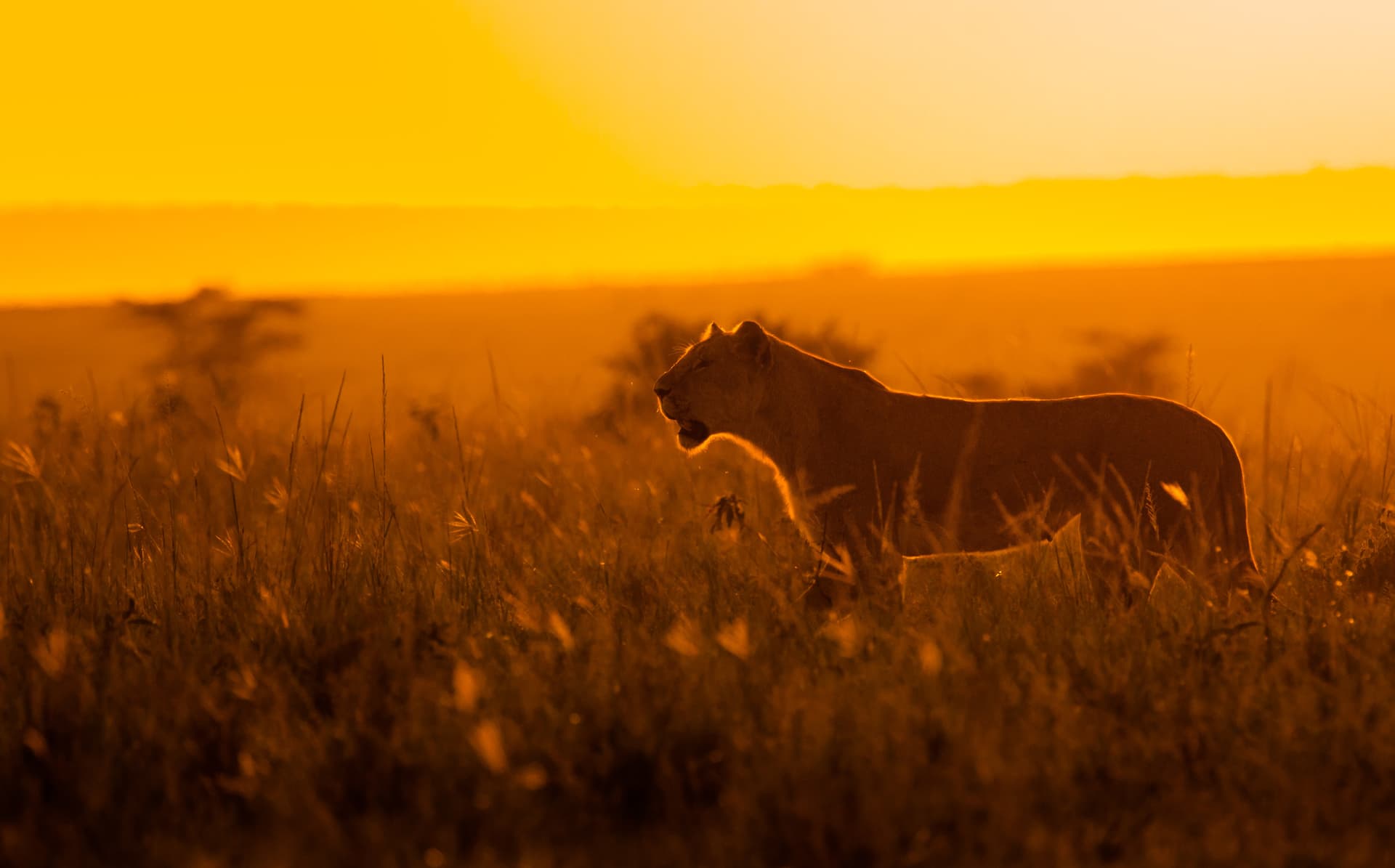
Kenya combines legendary wildlife, a mature community conservancy network, and rich cultural heritage. While the Maasai Mara draws global headlines, conservancies in Laikipia, Samburu, and Amboseli add privacy, rhino conservation, and adventurous activities beyond standard game drives.
Hero photography on this page is African Travel Inc creative (OWNER-approved site use; not ATI legal-cleared), fulfilled via our Outside Agents rail — not operated by Safari Awaits. Rate parity applies. Commercial disclosure. Photo credits.
How Kenya compares on price and season: costs and timing across our full destination map.
Choose Kenya if…
- You want an action-packed first safari with diverse activities (walking, night drives, horseback)
- Exclusive private conservancies and flexible guide activities matter to you
- You are traveling with family or a multigenerational group
- You want to combine safari with Indian Ocean beaches (Diani/Watamu) or cultural visits
Reconsider if…
- You intend to stay only inside public national reserve sectors during peak August crowds
- You dislike bush flights and prefer long overland road drives everywhere
- Your itinerary rushes across four distant regions in less than a week
Where to focus
Maasai Mara & Conservancies
The ultimate savannah ecosystem. Mara North, Naboisho, and Olare Motorogi conservancies border the national reserve, providing off-road driving, night safaris, and low vehicle density.
Read about Maasai Mara & Conservancies →Rhino sanctuaries, wild dogs & family villasLaikipia Plateau
A vast high-altitude plateau of private ranches and community conservancies sheltering East Africa's largest black rhino populations, camel treks, and private safari houses.
Read about Laikipia Plateau →Giant bull elephants & Mount Kilimanjaro viewsAmboseli & Chyulu Hills
Famous for big-tusked elephant bulls walking across dry dust plains with the snow-capped peak of Mount Kilimanjaro towering above.
Read about Amboseli & Chyulu Hills →Arid northern landscapes & endemic speciesSamburu & Meru
Rugged northern wilderness along the Ewaso Nyiro River, home to unique species like the reticulated giraffe, Grevy's zebra, gerenuk, and Beisa oryx.
Read about Samburu & Meru →Seasonality at a glance
| Period | Typical conditions | Who it suits |
|---|---|---|
| July–October | Dry season; warm sunny days, cool crisp evenings | First-time safari travelers, families, and high-season wildlife enthusiasts |
| January–February | Warm and dry nationwide; pleasant safari weather | Travelers seeking great game viewing with fewer crowds than peak summer |
| November–December | Short rains; brief afternoon showers, pleasant warmth | Photographers and value-conscious travelers seeking quiet reserves |
| March–May | Long rains; heavier tropical rainfall, cloud cover | Budget-smart travelers and repeat safari visitors preferring complete solitude |
Seasonal patterns are historical guidance, not guarantees. Verify current local conditions and operating schedules before booking.
Three ways to do Kenya, priced per couple.
Classic Conservancy Entry
$650–$1,000 / night$8,000–$14,000 per couple (7 nights)
Includes: Custom 4x4 open safari vehicle, comfortable tented bush camps, guide fees, meals
Authentic safari experience with outstanding local Maasai/Samburu guides in public reserves or classic conservancies.
Luxury Fly-In Conservancy
$1,100–$1,900 / night$15,000–$26,000 per couple (7 nights)
Includes: Bush flight transfers, private conservancy fees, night drives, bush walks, gourmet meals
Fly directly into top Mara and Laikipia conservancies for low-density game viewing, luxury tented suites, and unlimited activities.
Ultra-Luxury Private Villa
$2,000–$3,800+ / night$28,000–$50,000+ per couple (7 nights)
Includes: Exclusive private safari house (e.g. Mara Plains), private 4x4 & guide, dedicated chef
Complete exclusivity for families or groups, custom daily timing, helicopter excursions to Mount Kenya, and tailor-made luxury.
Move the inputs yourself: price a Kenya trip by month, style and nights.
Wildlife
Kenya delivers world-renowned predator sightings in the Maasai Mara, giant tusked elephants in Amboseli, and critical sanctuaries for endangered rhinos and northern endemic species.
- Big Cats
- The Mara savannah supports dense cat populations, famed for lion coalition battles, cheetah hunts, and resident leopards.
- Black & White Rhinos
- Ol Pejeta Conservancy in Laikipia shelters the world’s last two northern white rhinos and over 140 black rhinos.
- Samburu Special Five
- Reticulated giraffe, Grevy’s zebra, gerenuk (gazelle standing on hind legs), Beisa oryx, and Somali ostrich.
- Amboseli Tuskers
- Some of Africa’s oldest and largest elephant tuskers inhabit the swampy marshes fed by Kilimanjaro’s snowmelt.
Where: Mara North Conservancy for cat sightings without crowds; Ol Pejeta in Laikipia for rhino encounters; Amboseli for elephant herds against Kilimanjaro.
The ways Kenya is best done.
Private Conservancy Safaris
Experience off-roading, night drives, and walking safaris in exclusive community conservancies.
How it works →ExperienceMultigenerational Family Safaris
Private villas, flexible meal times, bush craft programs, and child-friendly local guides.
How it works →ExperiencePhotographic Safaris
Custom open 4x4 vehicles, dedicated eye-level photographic mounts, and skilled photo guides.
How it works →ExperienceBush & Beach Safaris
Pair the Maasai Mara savannah with the pristine beaches of Diani or Watamu on the Indian Ocean coast.
How it works →
Where you sleep decides what you wake to.
Sample itinerary structures
Structure matters as much as place — see how the nine safari styles change vehicle time, privacy and cost.
Kenya classic fly-in
Amboseli / Samburu + Maasai Mara ConservancyCombines dramatic northern or elephant scenery with prime cat viewing in the Mara.
See this itinerary →9–11 nightsConservancy & rhino focus
Laikipia Plateau + Mara North ConservancyDelivers maximum privacy, walking safaris, night drives, and active rhino conservation.
See this itinerary →11–14 nightsBush, culture and beach
Maasai Mara + Laikipia + Diani Beach coastPairs intense big-game safaris with private house stays and coastal relaxation.
See this itinerary →Frequently asked questions
What is the difference between the Maasai Mara Reserve and a Mara Conservancy?
The National Reserve is public, permits more vehicles per sighting, and enforces strict off-road and curfew rules. Conservancies are private lands with strict camp caps, allowing off-road tracking, night drives, and walking safaris.
Is Kenya safe and suitable for young children?
Yes. Kenya has outstanding family-friendly lodges, malaria-free options, private villas, and experienced guides who excel at engaging kids with bush survival skills.
How do internal bush flights work in Kenya?
Scheduled bush planes (e.g. Safarilink, Airkenya) fly directly from Nairobi Wilson Airport (WIL) to regional bush airstrips in 45–90 minutes. Soft-sided luggage limits apply.
Official planning sources
Use official destination and protected-area sources for baseline information. Entry rules, fees, health guidance, access and camp policies can change.
Go deeper on Kenya
Build the right Kenya brief.
Share your month, budget, travelers and priorities. We’ll narrow it to the regions, trip structure and partners that fit — and tell you which don’t.
Find my safari